


What becomes possible when we stop comparing AI to ourselves? The answer just might be the difference between automation and transformation. ~ Jaime Teevan
Jaime Teevan is the Chief Scientist and Technical Fellow at Microsoft. Let me compare myself to her. I am always two steps behind. I was born two years later than her. I entered MIT two years later than her. I got my PhD two years later than her. I have two children, two fewer than her four. 😁
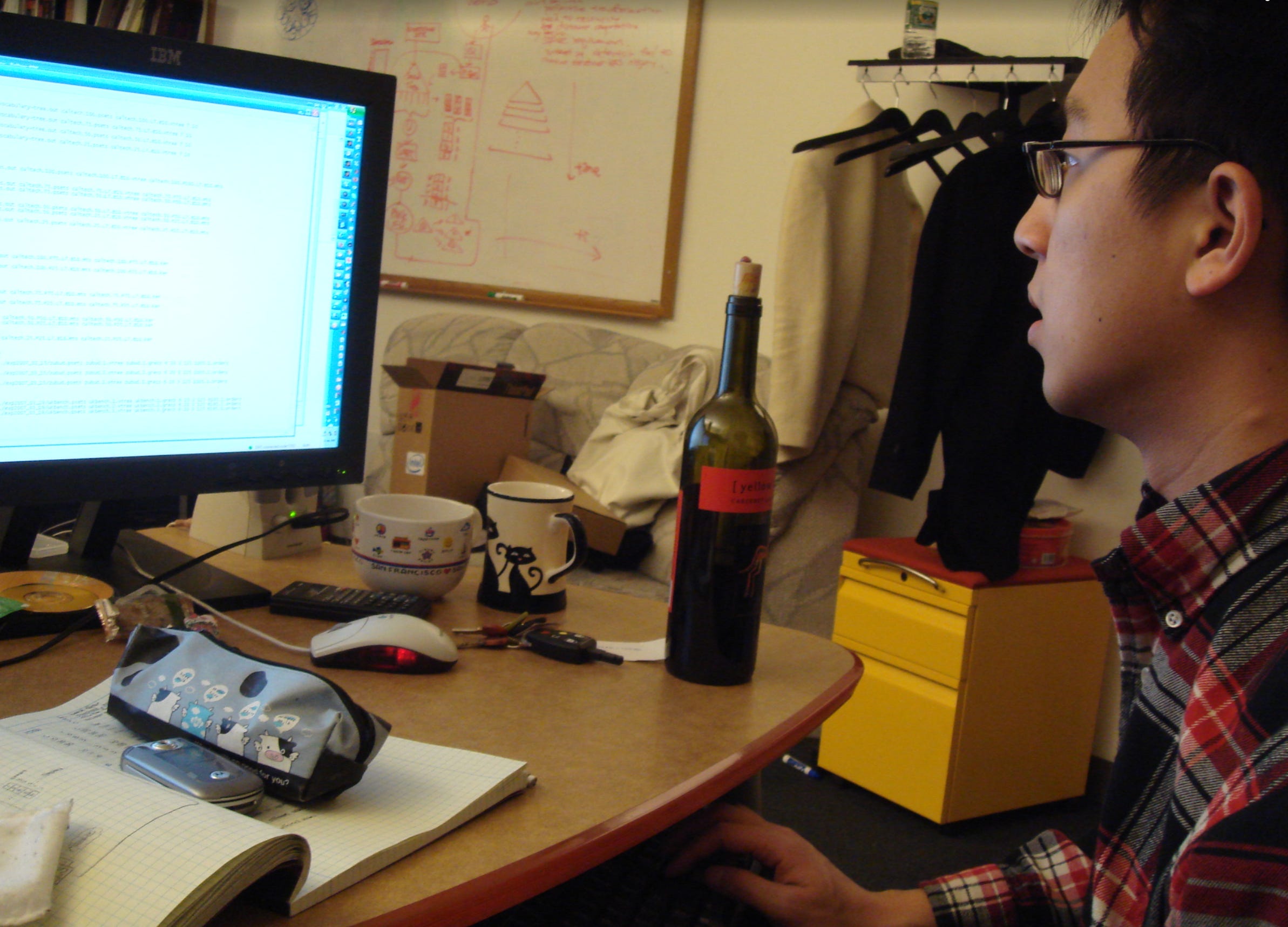
As I was comparing myself to Jaime, I was also reminded how similar we were back at MIT. We shared the same thesis committee member, Prof. Rob Miller. We shared the same application focus—search. Jaime studied personalized search, whereas I studied image-based search. We shared the same duty to cook lunch for more than a hundred PhD students.
Fast-forward to 2020, Jaime started the Future of Work initiative at Microsoft. I received a new grant from NSF to study AI’s impact on the Future of Work. In retrospect, we both underestimated the impact, another similarity.
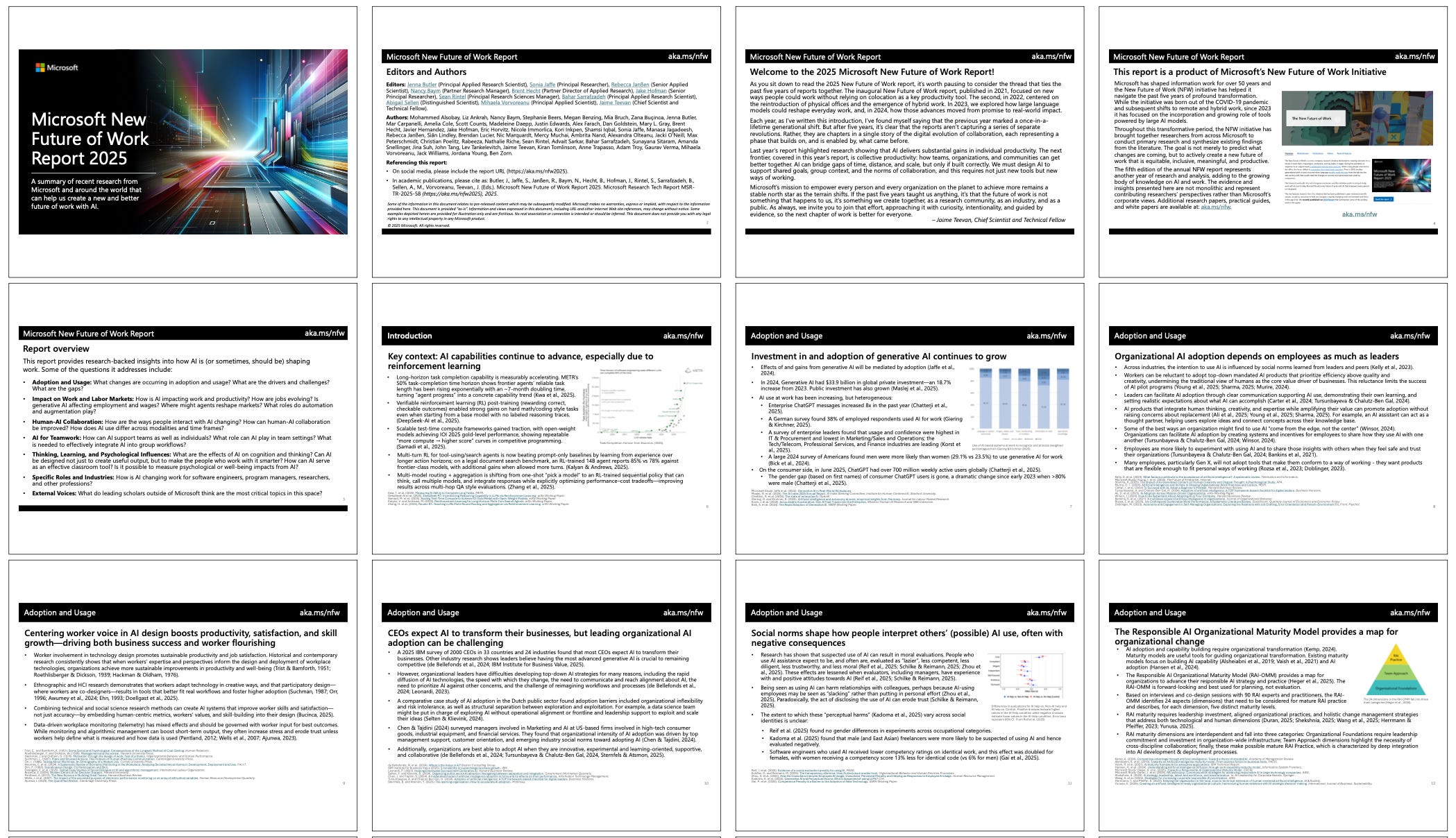
In 2025, Jaime, along with her team of editors and contributors from inside and outside of Microsoft, published the fifth New Future of Work report. Our team also published the third paper from my Future of Work NSF project, once more two steps behind.
p.s., I highly recommend you all to read this report: https://aka.ms/nfw2025
When I compare myself to Jaime, my human friend, my connection with her grew stronger. When I compare myself to AI, AI just knows more, writes better, counts faster, drives safer, draws nicer. But there’s no soul behind it. It simply has access to a lot more data. I cannot feel connected with AI. AI isn’t human.
Indeed, AI isn’t human. Last week Jaime wrote an article about this point. She kindly agreed to let me share this article with you.
AI Isn’t Human
written by Jamie Teevan (Link to her original article on LinkedIn)
Early lessons from our first close encounter with a very different intelligence.
It’s tempting to think of AI as being “like us.” Generative AI models speak our language, respond fluidly, and feel conversational, so we naturally anthropomorphize them, going so far as to frame them as virtual colleagues or even friends. But leaning too hard on a human metaphor for AI minimizes what’s uniquely human and constrains our imagination as to how we can best use it. After all, we already know how to collaborate with people. The real opportunity ahead is to explore what’s possible when we work with something that is fundamentally different.
AI doesn’t just mimic human intelligence, it introduces new capabilities that can transform how we learn, create, and collaborate. Here are five ways AI is different from humans, and why those differences matter.
1. Scale of Intelligence
Humans excel at nuanced judgment, but we’re bounded by time and attention. Psychologist George A. Miller famously found that most people can actively hold only around five to nine independent numbers in their head at once. No person can read thousands of survey responses or synthesize millions of product reviews in an instant. AI models have no such limits. Consider restaurant reviews. Where you once had to read through each review one by one to get a feel for a restaurant, AI can now surface patterns across hundreds of reviews, amplifying insights or perspectives that you might otherwise have missed. This isn’t just about efficiency; it’s a shift toward collective intelligence.
Implication: Use AI to aggregate insights from employees, customers, and partners, turning fragmented feedback into actionable strategy.
2. Speed of Ideas
Human communication is often asynchronous and inherently slow. Even in fast-moving organizations, feedback loops take time. We wait for inspiration to strike, and then we wait again for others to weigh in. AI, on the other hand, responds instantly, offering ideas on demand and immediate feedback. You can brainstorm a dozen directions in seconds, and then immediately test and refine them. AI becomes both your creative partner and your first reviewer, helping you move from blank page to viable concept without waiting for the next meeting or email reply. It’s now possible to replace the “waiting game” of traditional collaboration with immediate, context-aware input. Late at night or across time zones, you can get suggestions, iterate, and improve, all without waking anyone up.
Implication: Redesign the cadence of work. Route first drafts and first feedback to AI by default, then bring people in where judgment is needed.
3. Continuity of Interaction
People carry context from one conversation to the next. That continuity is valuable. It’s how we build relationships and shared understanding. But continuity can also constrain us. We may hesitate to ask the same question twice or to explore radically different directions for fear of seeming inconsistent. If I make a bad argument in this article, you can’t just wipe it from your mind and let me give it another go. With AI, it’s possible to erase history and start over – there’s no penalty to being curious. Want to explore a different framing or simulate an alternative scenario? Reset and rerun. AI won’t judge, remember, or cling to the past. This ability to start an interaction afresh makes AI a powerful tool for creative exploration.
Implication: Use AI to model multiple futures. Instead of debating one strategy, generate and compare several, stress-testing assumptions before committing.
4. Externalization of Cognition
Human reasoning is opaque. We infer intentions and logic from what others say or do, but we can’t scroll through someone’s thought process. That opacity has social value. It fosters trust, privacy, and connection. But it also limits how we learn from one another. AI makes this invisible process visible. You can review chain-of-thought, tweak prompts, and trace how changes influence outcomes. Ask AI to provide feedback on an email from the perspective of an engineer, a marketer, or a customer, and watch how the responses shift. This transparency makes it easier to experiment, iterate, and learn. What’s more, AI’s thinking isn’t just visible, it’s portable. Prompts, responses, and model configurations can be saved, reused, and passed between people, turning not just outputs but the reasoning behind them into something others can pick up and use.
Implication: Make thinking shareable. Capture and circulate high-impact prompts, workflows, and model setups so your organization learns faster than any one person can.
5. Ownership of Outcomes
Humans operate inside systems of accountability. We learn through discomfort, where mistakes sting, reputations are at stake, and judgment is shaped by social and organizational norms. AI, on the other hand, can operate boldly and at scale, but it can’t be held responsible. It can’t lose its job, face consequences, or feel the weight of a bad decision. This difference matters. As AI takes on more execution, the human role shifts toward deciding when to trust its output, when to override it, and how to design the surrounding guardrails. The risk isn’t that AI will make “wrong” choices but that it has no skin in the game. That’s why human oversight matters. We need to design AI workflows that align AI outputs with organizational values, ensuring creativity doesn’t come at the cost of compliance or ethics. The opportunity is to pair AI’s fearless exploration with human oversight to open up previously unimaginable paths that people can turn into direction.
Implication: Treat AI as a bold contributor, but not a responsible one. Assign clear human ownership for decisions to ensure AI operates in alignment with your organization’s values.
The Leadership Opportunity
AI isn’t here to replace human intelligence; it’s here to expand it in ways we’ve only begun to imagine. AI will inevitably change your organization, and it’s your ability to capitalize on what makes it different that will determine how meaningful that change is.
So stop using AI to do the things humans already do well, and start using it to scale insight, accelerate iteration, explore without fear, and externalize expertise. More than a new tool, AI is a new layer of organizational cognition, one that can capture, share, and amplify how your teams think.
The next time you catch yourself saying, “AI is like a person,” pause. Then ask: What becomes possible when we stop comparing AI to ourselves? The answer just might be the difference between automation and transformation.
~ Jaime Teevan, Chief Scientist, Microsoft

Thanks for sharing this, Prof. Tom. Can we also add that AI would never survive years at MIT with YellowTail Shirah? Let's stop comparing synthetic and human experiences once and for all, they aren't even in the same category.