

Layer normalization is used to stabilize training when individual samples exhibit extreme activations and highly varying scales within a layer. For a given input, some features may spike to very large values while others remain small, causing a single sample’s activation vector to be poorly scaled and dominated by a few components. Layer normalization computes statistics across features within each sample, rescaling activations to a consistent scale so no single feature overwhelms the computation in that forward pass. This makes optimization more stable and is especially effective when mini-batch sizes are small or batch statistics are unreliable.
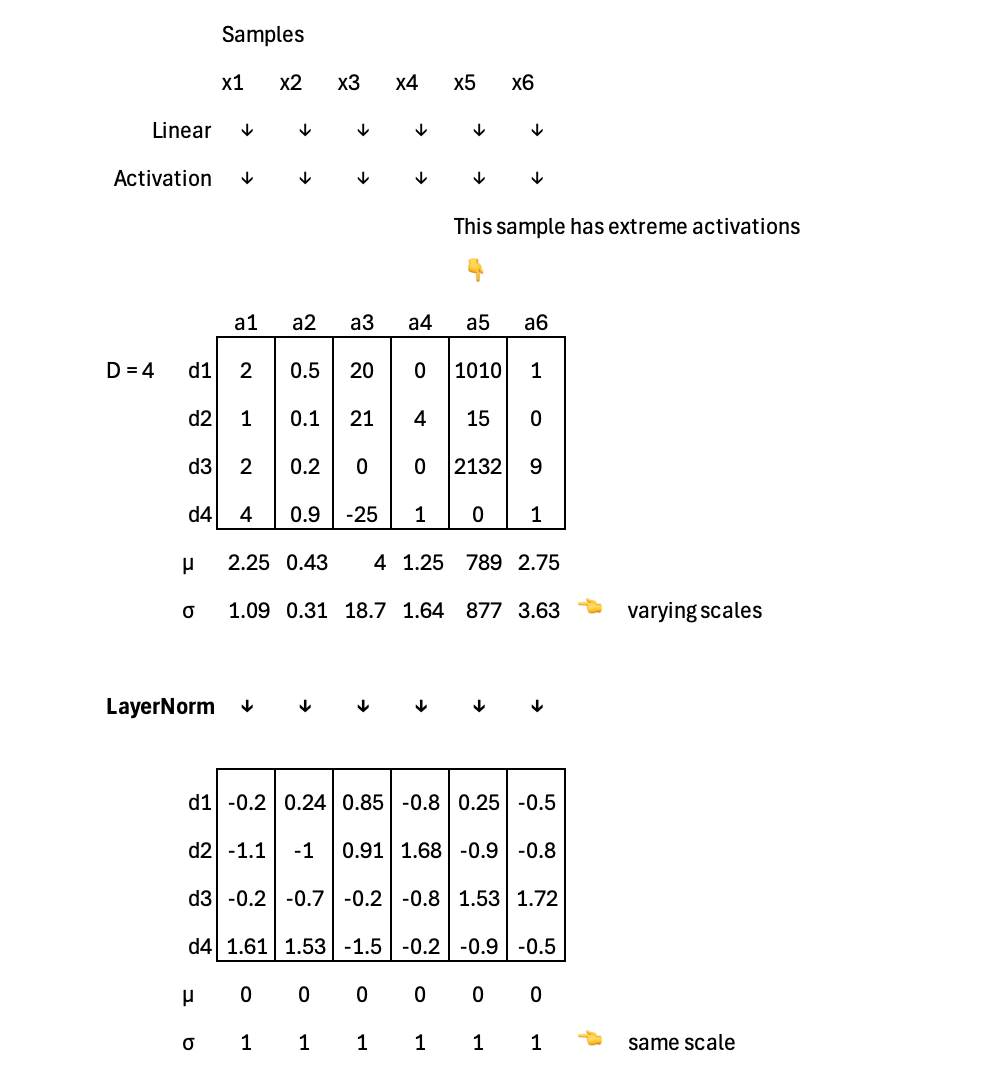
Excel Blueprint
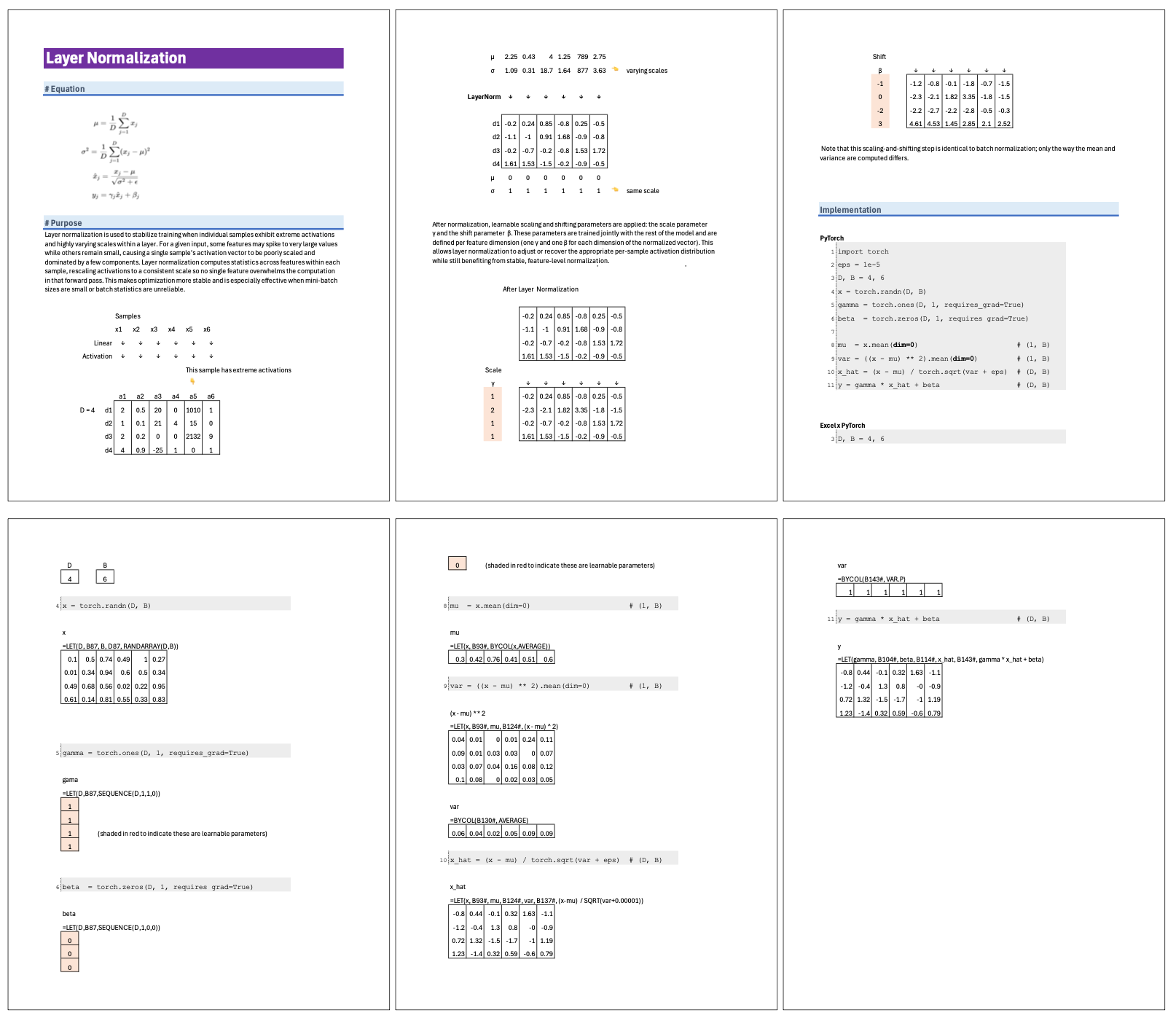
This Excel Blueprint is available to AI by Hand Academy members. You can become a member via a paid Substack subscription.