

Width is the first thing a layer decides, and I drew one input feeding two different layers to show where that decision lives. Both weights read the same 64 features. The left one turns them into 8, the right one into 128.
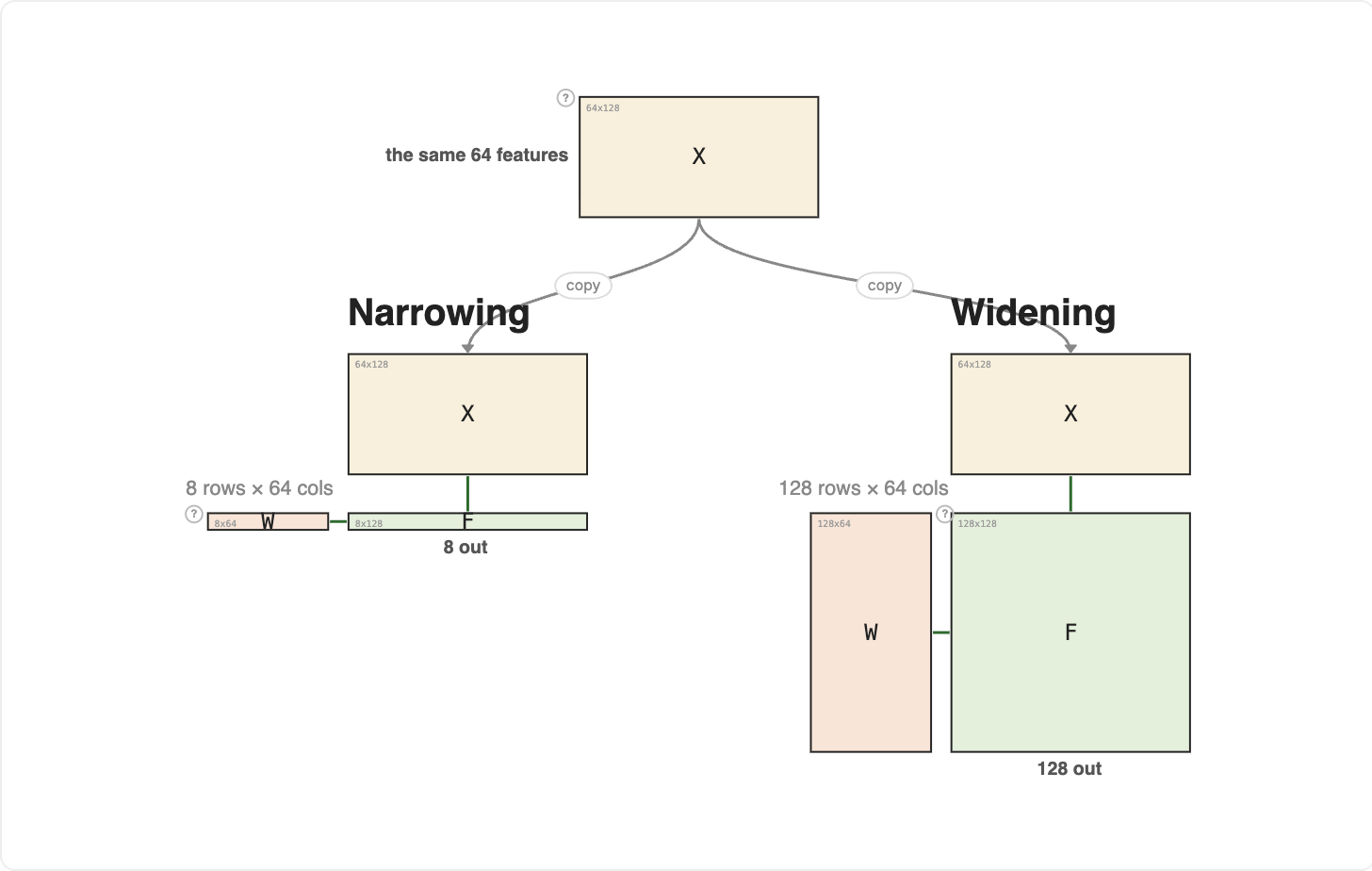
A weight is always out × in: one row for every output feature, one column for every input feature. Since both layers read the same input, both weights have exactly 64 columns. The only thing that differs is the height, and the height is the answer.
So the weight's shape is the opposite of the job it does. A short, wide weight narrows the data. A tall, thin weight widens it. It looks backwards until we remember that the rows are the output, not the input.
From here we can read the rest of the series without labels. A stack of wide weights is an encoder, a stack of tall ones is a decoder, and anything with wide weights above tall ones is squeezing the data through a middle.
Next:
3. Deep