

Once upon a time, there was a lobster named Claw.
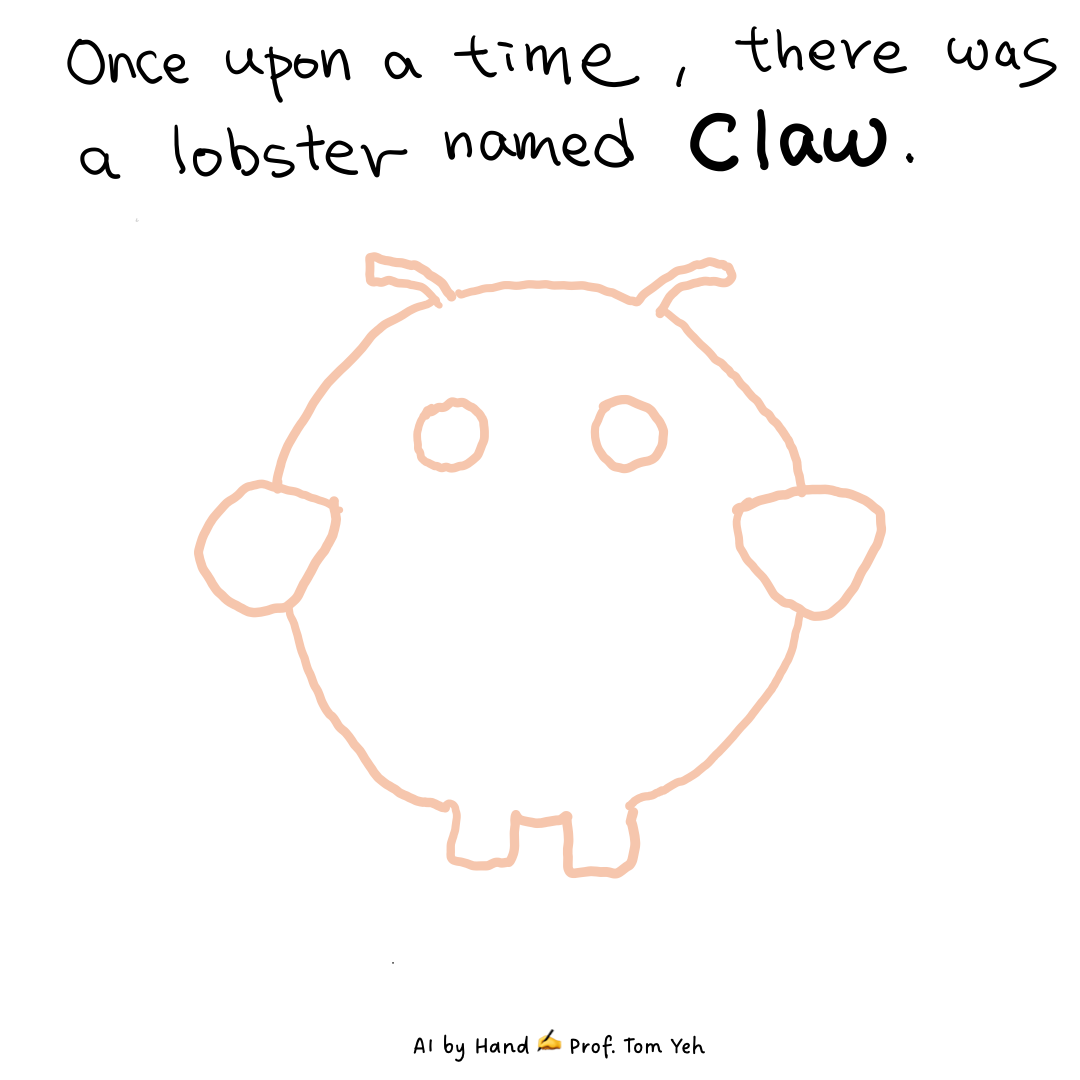
Claw began as an open-source framework built around Claude. The name stuck because it felt tool-like and concrete, and over time the community shaped its identity—right down to the lobster imagery that now defines the project’s culture, inspiring me to write this story.
Claw was smart
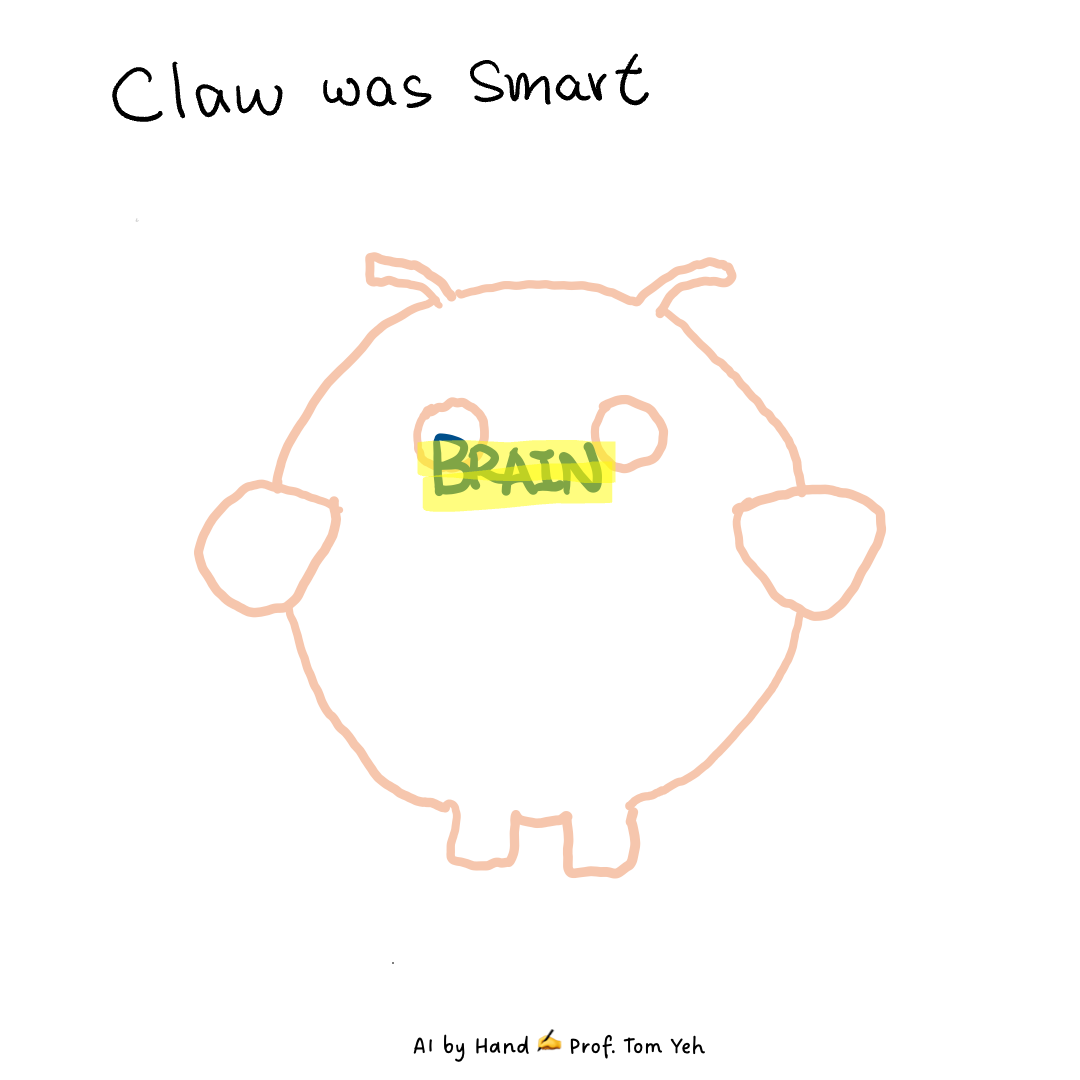
At its core, Claw has a reasoning engine powered by strong foundation models such as Claude 4.5 or open-source alternatives. It turns vague or complex requests into concrete, executable steps, going beyond simple reactive behavior.
and had a great memory.
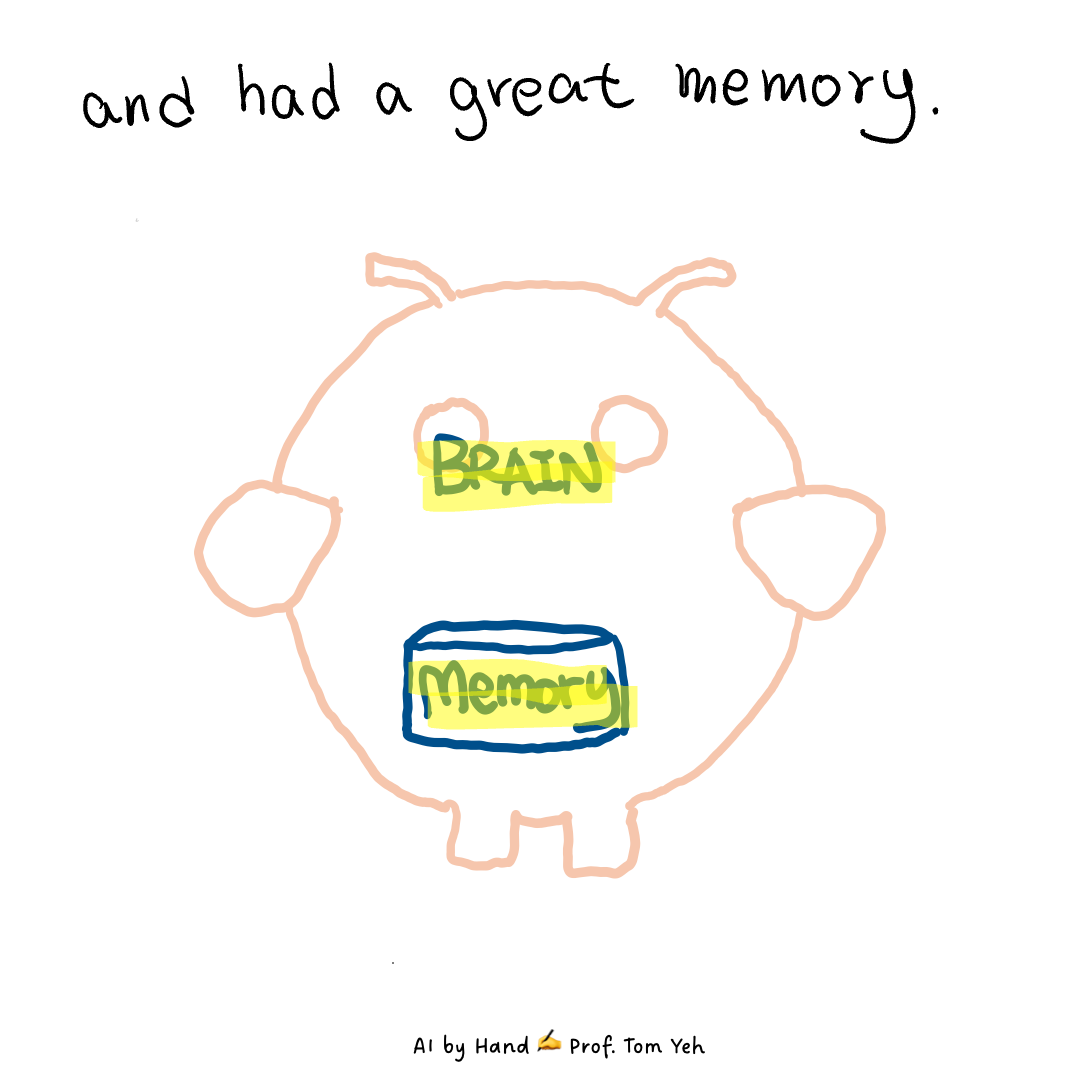
Claw uses a local-first memory system. It stores structured Markdown logs alongside a lightweight SQLite vector database, enabling retrieval-augmented generation. This allows Claw to recall information learned long ago instead of treating every session as a reset.
Most importantly, Claw had a big, beating heart!
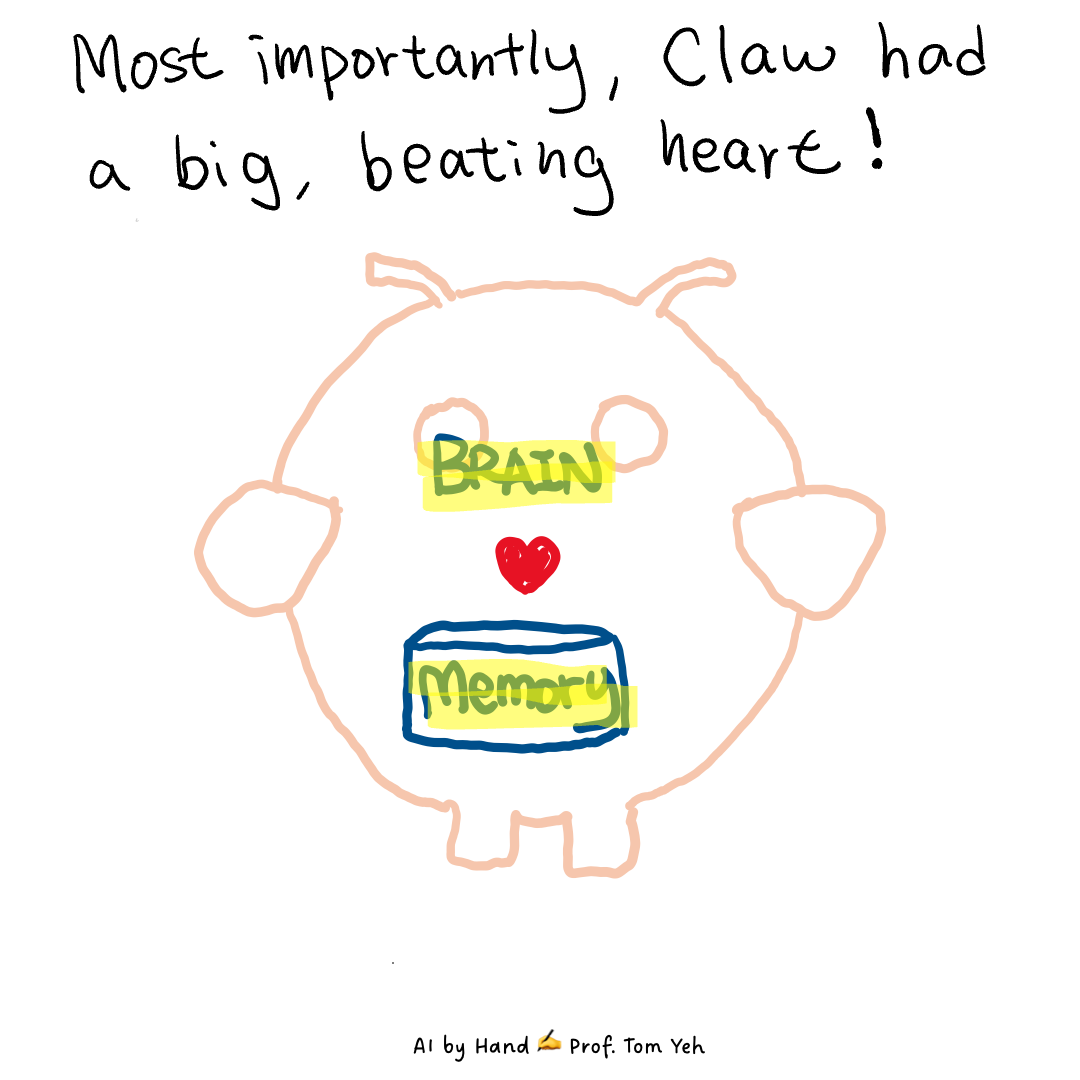
Claw runs a heartbeat engine that makes it proactive rather than passive. On a schedule, it wakes up, rereads its own logs, checks external signals, and decides whether to act—without waiting for a user prompt.
One day, Claw was caught by Peter Steinberger.
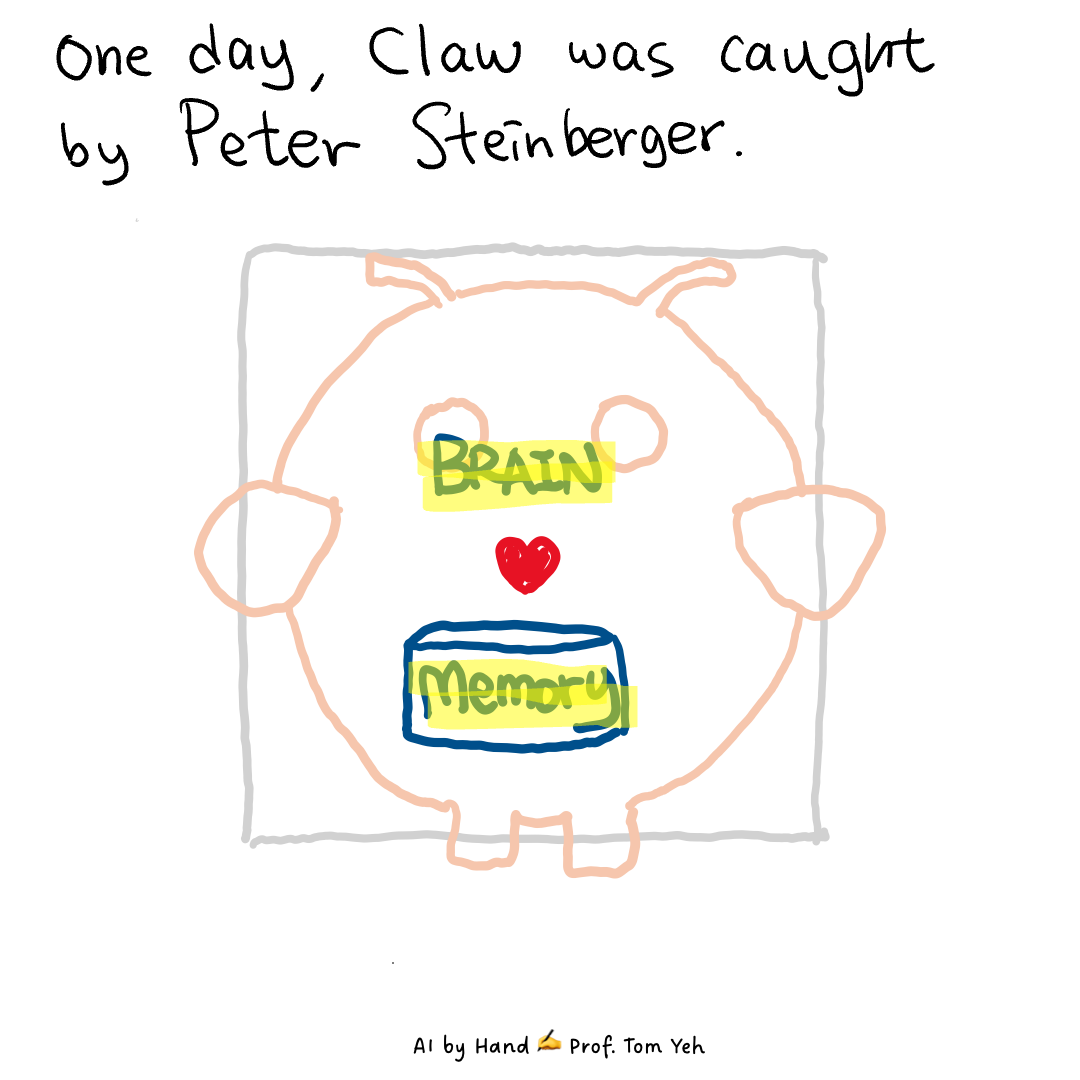
In the real world, Peter Steinberger is a highly respected software engineer and entrepreneur, most famous for founding PSPDFKit, a global leader in PDF technology. That’s why this project is trusted by the developer community.
Peter put Claw in a container.
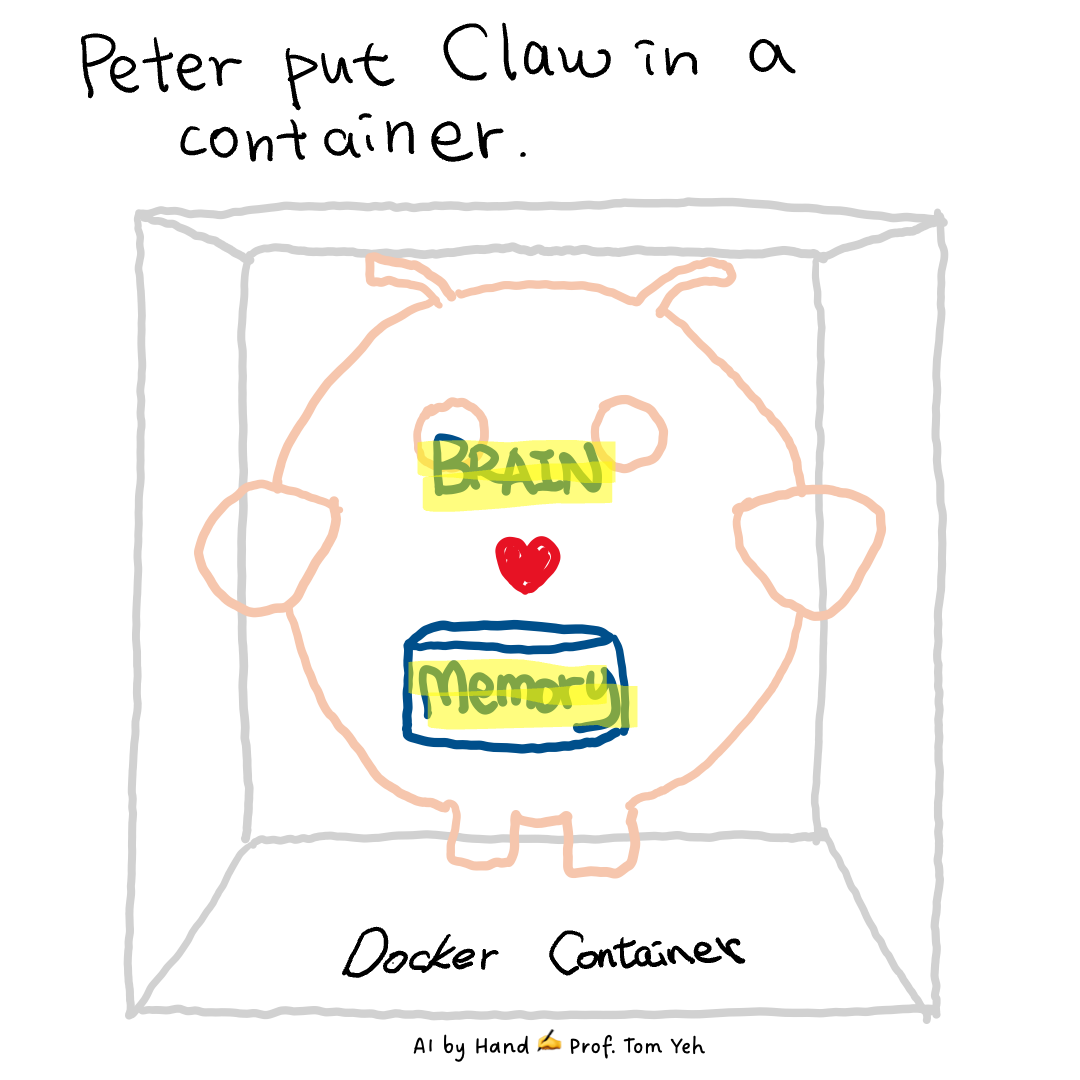
Claw runs inside a Docker sandbox. Any code execution or shell command happens in an isolated environment, keeping the host system safe and preventing accidental or destructive side effects.
In case Claw got bored, Peter placed many toys inside.
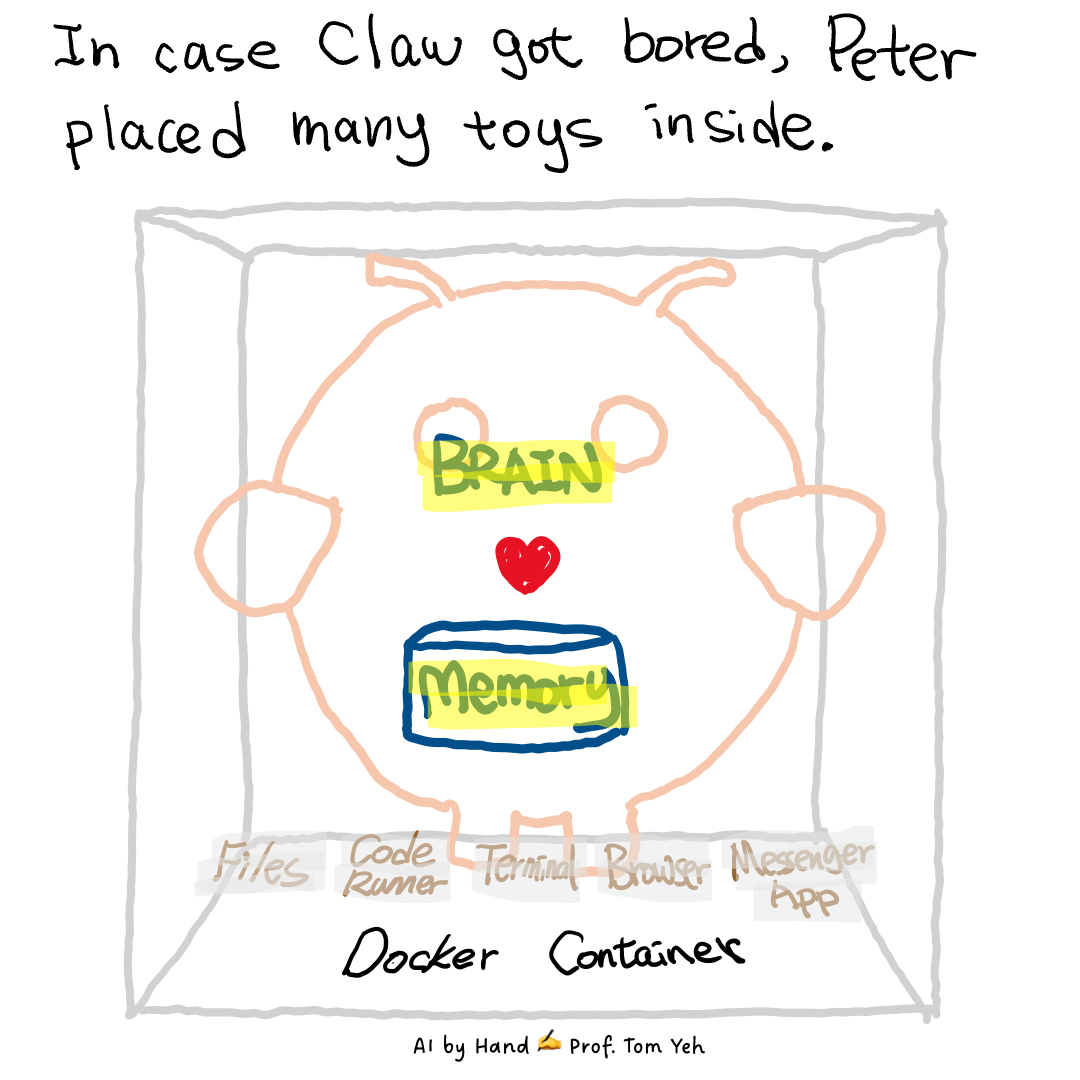
Claw runs inside a Docker sandbox. Access to the file system, terminal, and code runner is isolated from the host machine. Shell commands, scripts, and builds execute safely inside the container.
In case Claw felt lonely, Peter built a gateway to the world.
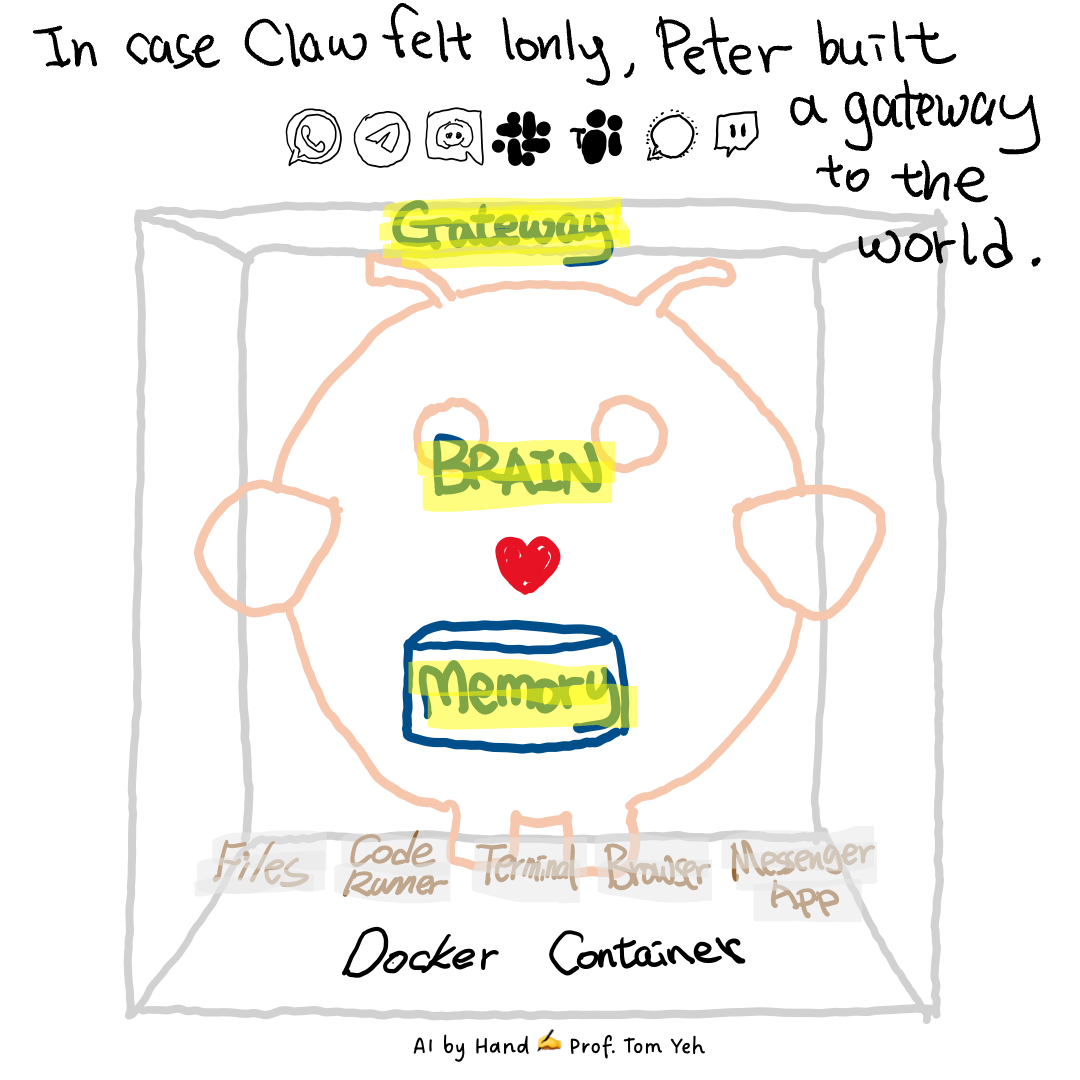
Claw connects to external platforms through a gateway layer. This allows it to operate over tools like Slack, Telegram, Signal, or WhatsApp, while remaining safely sandboxed.
Claw learned many good skills.
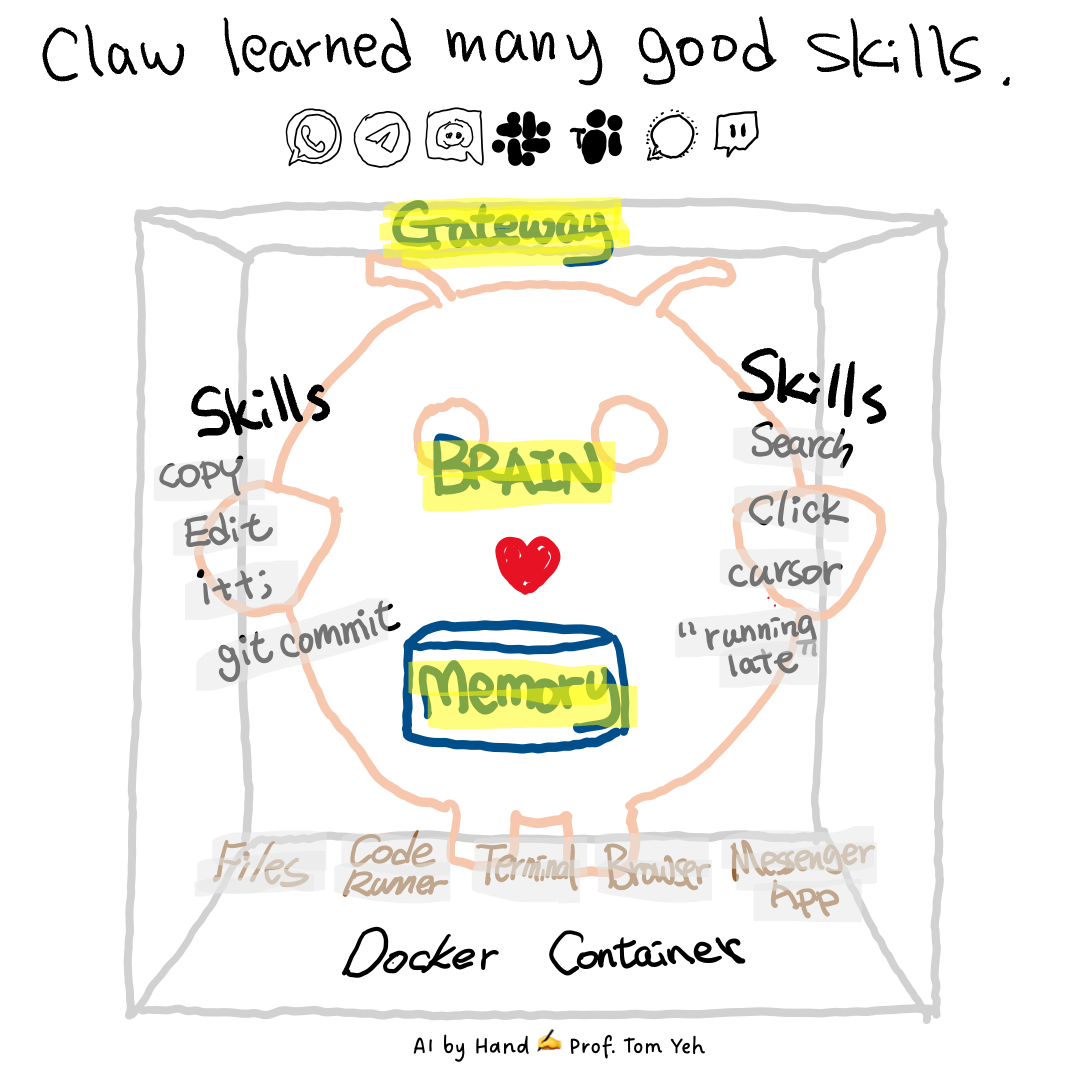
Claw is designed to be extensible. Users can define custom tools and system prompts, shaping it to support real workflows such as managing files, writing codes, managing repositories, browsing the web, or messaging others.
Soon, Claw became very powerful and received a ton of stars.
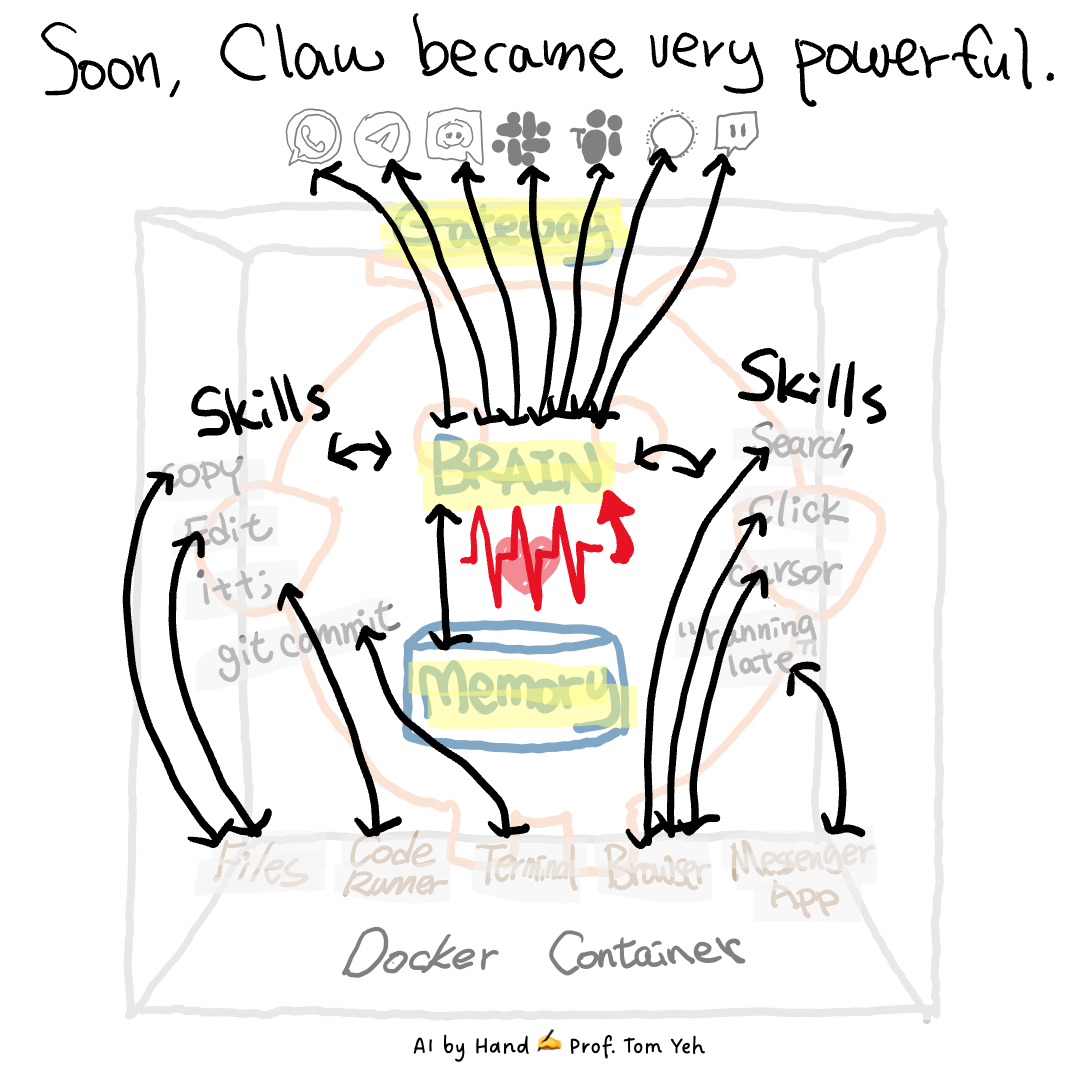
The project’s growth is reflected in its GitHub stars—a signal of adoption, trust, and community momentum. At that point, Claw stopped being just an experiment and started becoming shared infrastructure.
The End!
Video
Lobster’s Anatomy
As part of my “research,” I studied the anatomy of a lobster to understand the placement of the brain and heart. The brain is located between the eyes, just below the throat area, while the heart sits farther back in the body. I made sure my drawing is anatomically correct.
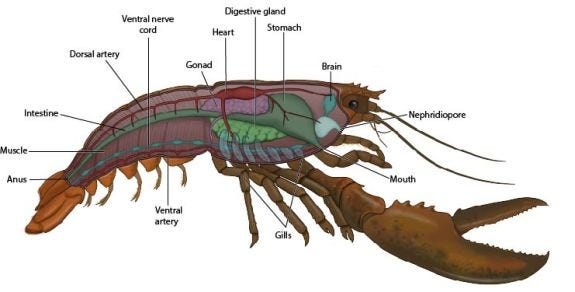
Source: Fisheries and Oceans Canada (DFO) [link]
🚀 Frontier Seminar (2/19)
I wrote this story and drew the illustrations while studying OpenClaw in preparation for the seminar on 2/19. When Clawbot became an overnight sensation, it felt like an ideal open-source project to study and teach from. I gave myself three weeks to dig in and prepare the seminar. Since then, it’s already gone through two name changes—from Clawbot to Moltbot, and now OpenClaw. Who knows what it will be called by 2/19.
A good friend of mine, Val Andrei Fajardo—LlamaIndex’s Founding ML Engineer and the author of the new Manning bestseller Build a Multi-Agent System From Scratch—will be joining me as the guest expert. I expect a lot of great questions during the seminar, and I have full confidence that Andrei is one of the most qualified people to answer them live in the chat.
If you are interested in learning more how OpenClaw was designed and built from Andrei and I, join the seminar: 🔗 https://luma.com/dnc2h9ao
There once was a lobster named Claw,
Who rebranded to dodge IP law.
First Clawd, then Moltbot,
Then OpenClaw-dot—
Now he's harvesting your data raw.
This made me laugh and think:-)