


It probably would take NanoBanana 2 less than five seconds to generate an impressive drawing of a Generative Adversarial Network (GAN). But it took Luke, my 15 year-old, almost 3 hours (10800 seconds) to draw this. In computer science term, we are talking about 4 orders of magnitude slower.
Luke loves drawing growing up. Like many others who share the same love for drawing, Luke is worried about AI rendering his drawing skills seemingly pointless. I tried to assure him it’s definitely not the case. I told him if the true value of art is to connect with others, a 5-second AI generated art will not connect; but your hand-drawn art will connect with me, making me proud, and with others, who can see and appreciate the humanity behind your work.
Your positive responses to Luke’s earlier CNN ~ draw by hand article is clear evidence. Thank you!
How to Draw a GAN in Five Steps ✍️
(drawn and written by Luke Yeh)
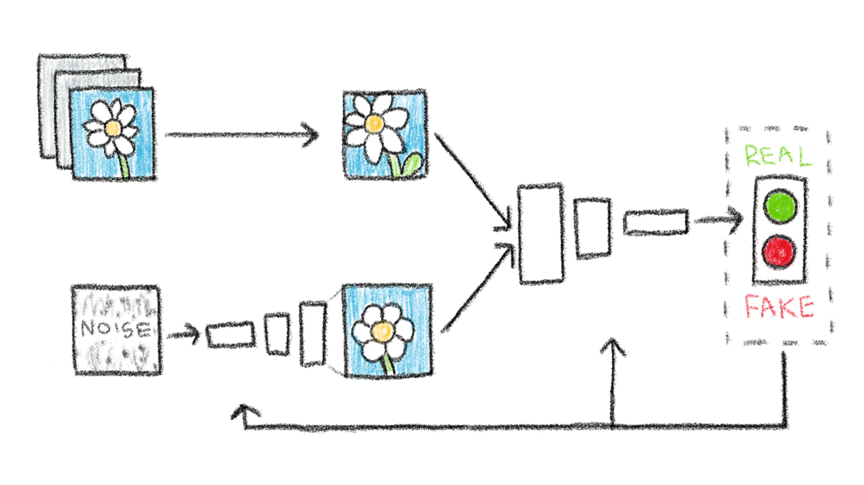
In this step-by-step guide, I’ll break down how generative adversarial networks work by sketching them out by hand. By the end of this post, you’ll have a strong foundational understanding of their inner workings and key components. Each step is hand-illustrated for clarity and readability, and I encourage you to follow along and sketch out a model yourself. Before we begin, let’s go over what exactly GANs are.
What are GANs?
A generative adversarial network (GAN) is a type of machine learning model that learns from existing data and then tries to create new data that looks real. It’s typically used in an unsupervised setting and relies on deep learning. It is trained through a process involving two neural networks competing against each other. One network, known as the generator, generates samples, and the other, the discriminator, judges whether those samples are real or fake. With enough repetitions, the model can eventually learn to generate realistic outputs.
Now let’s explore how these networks work.
Step 1 - Train
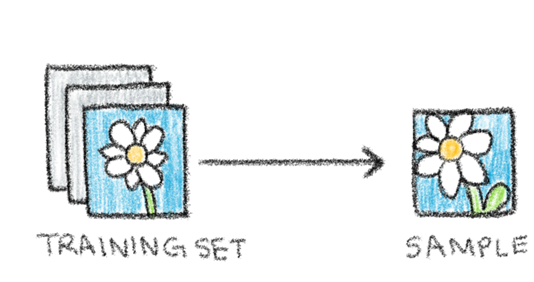
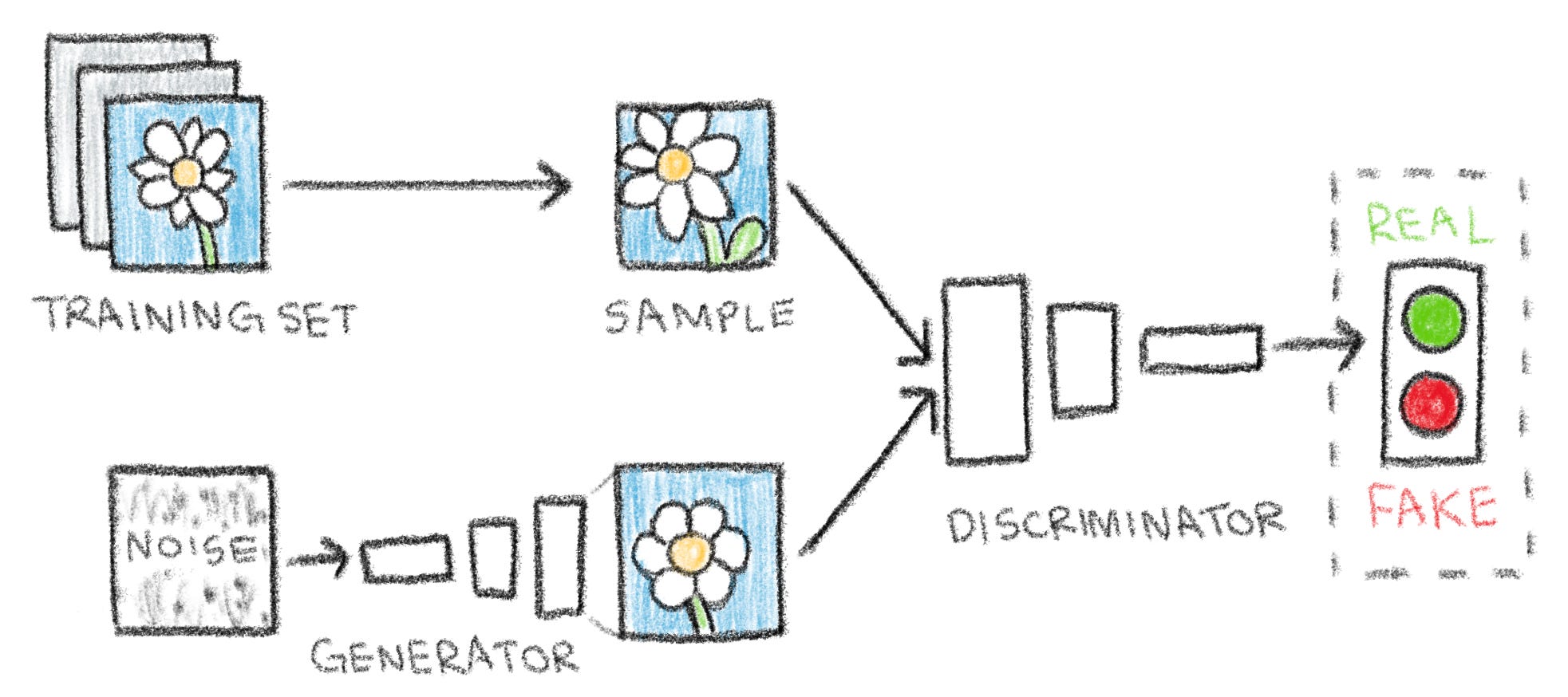
Before a GAN can begin learning or generating outputs, it must first be provided with a training dataset. The training set defines the target distribution, or the overall structure of the input data, by showing the network what kinds of features and elements occur and how often. From this, the generator learns to produce new images that follow those same patterns.
Step 2 - Generate
Now that we’ve gone over how GANs learn what their outputs should look like, it’s important to explain how they actually generate them. It all starts with noise. Noise serves as the foundation of the output generation process, providing the initial input that can be transformed into a more structured output.
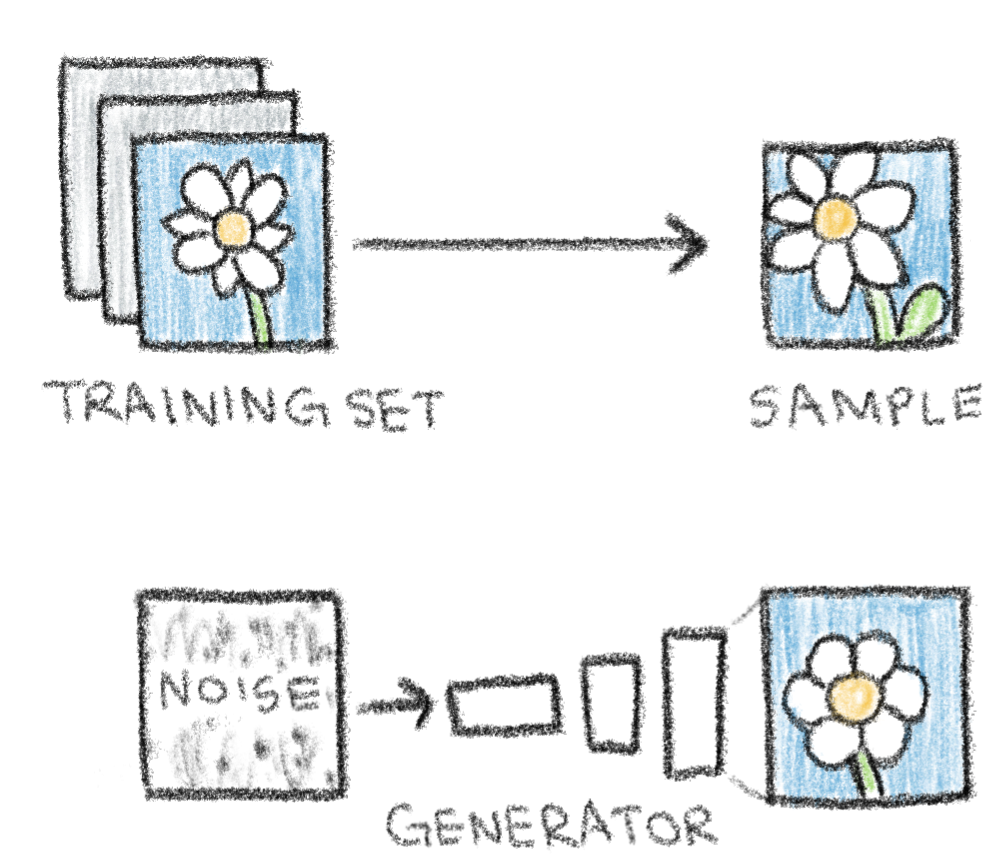
The transformation in this case is executed by the generator, which turns the random noise into a refined output.
Step 3 - Discriminate
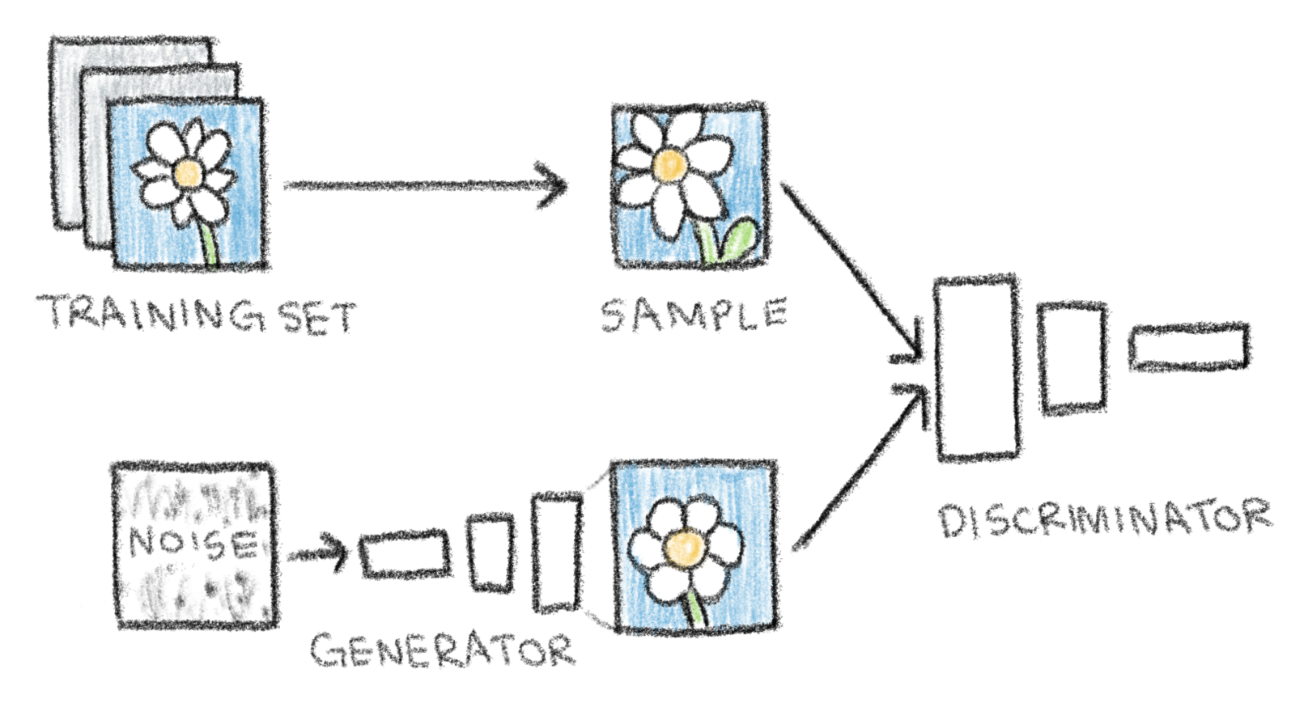
Let’s put everything together with the most crucial step of the process - discrimination. Here, the discriminator evaluates the real and generated sample and assigns probabilities according to how likely each input is to be genuine.
Step 4 - Real or Fake?
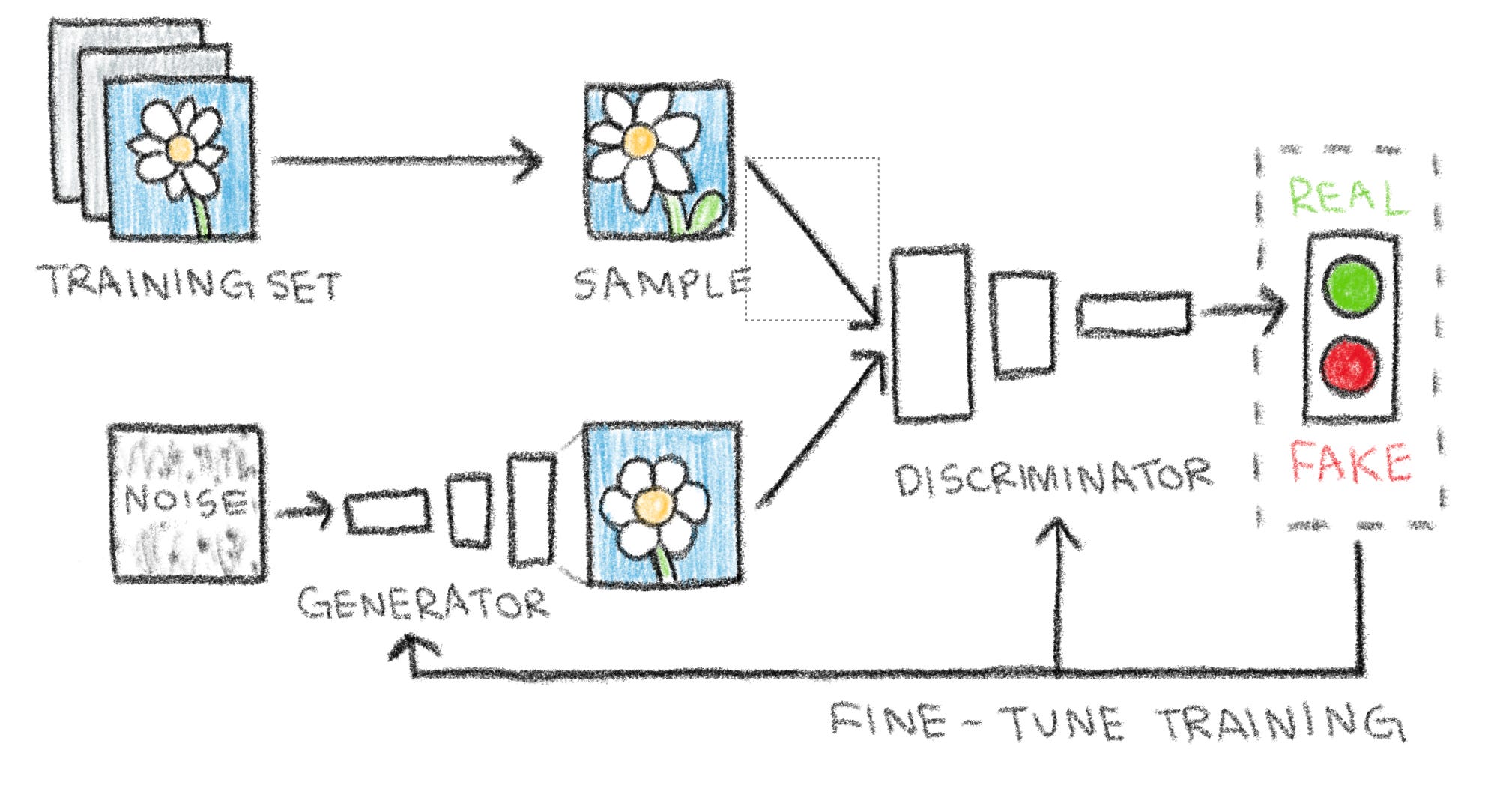
Based on the evaluation from the previous stage, the discriminator then classifies the input as either real or fake. This produces valuable feedback which is used to drive the process of adversarial learning.
Step 5 - Repeat
As you might expect, GANs don’t simply stop after one round of discrimination. Instead, the cycle of generation and evaluation is repeated continuously. Each repetition allows the model to become increasingly proficient at generating realistic outputs, earning this process the fitting name fine-tune training.
~ Luke
The images of your son are so valuable together with your writing, it is much more fun to read. Thank you both!
i am doing my internship!!! and these are kinda gold for me to understand simplyyy